

Bio-imaging platform for agriculture
Spray a work tool, shine a UV light, and see in under 30 seconds whether fire blight bacteria are on it.
A 30-second hygiene check for work tools
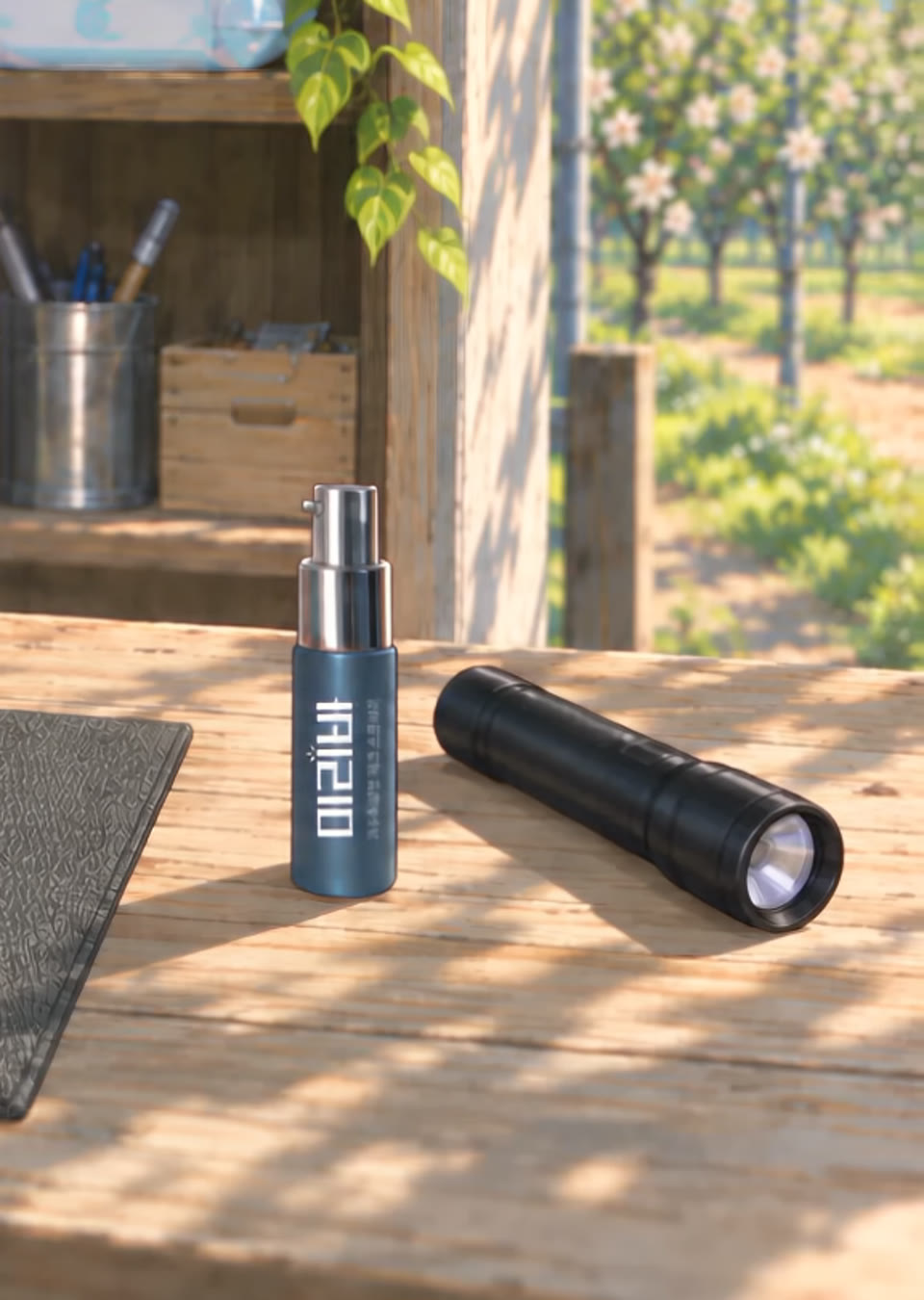
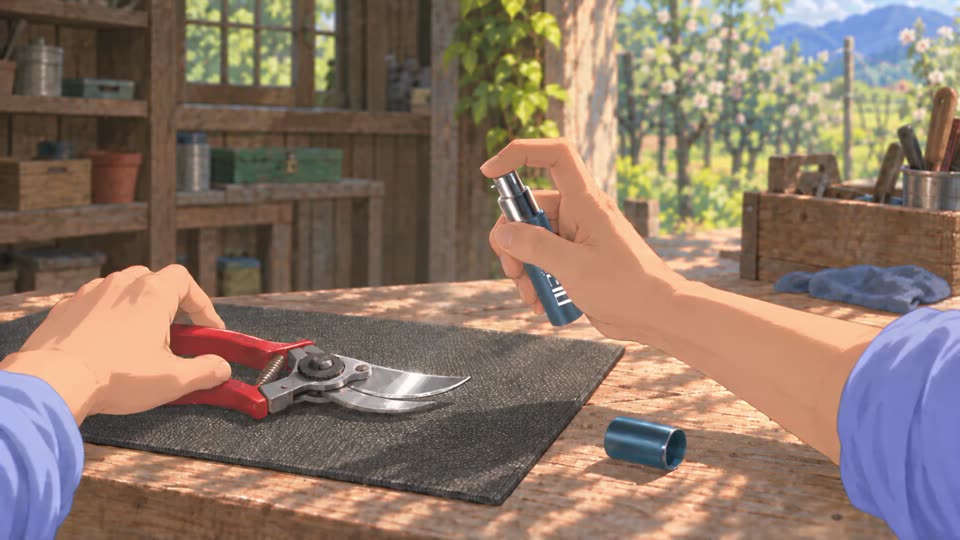
01 / 03
MIRIVA
Price · On request
No prep · 30 seconds · Right in the field
Spray a work tool and shine a UV light: wherever fire blight bacteria are present, they glow.
For cooperatives, local governments, and grower groups, we quote by volume.
MIRIVA checks the hygiene of work tools. It does not confirm fire blight infection. If you suspect an infection, report it to your local Agricultural Technology Center or provincial agricultural extension service.
If it glows, bacteria may be on the tool
Spray MIRIVA and shine a 365 nm UV light: only the spots where fire blight bacteria sit light up. A tool that has been wiped clean stays dark.
UV on · Under UV, the contaminated blade glows
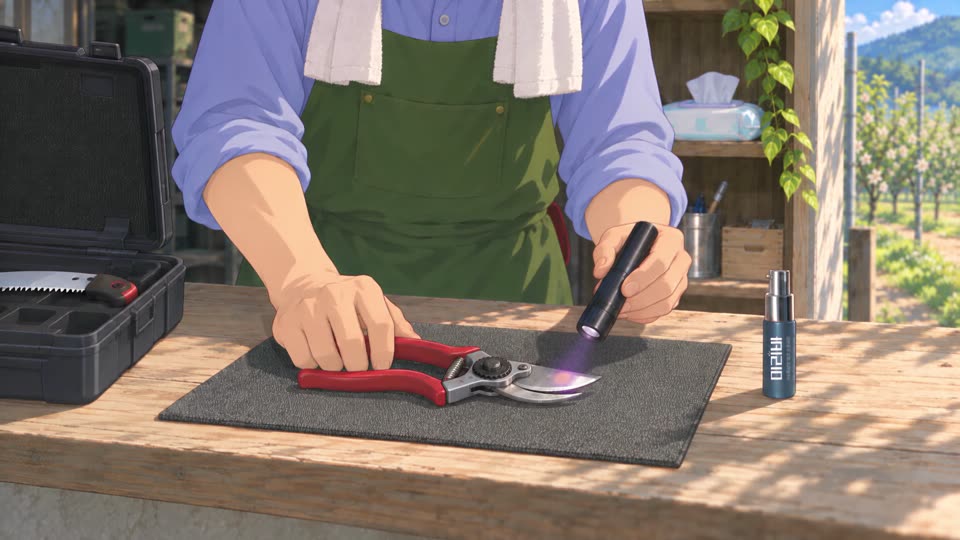
Four steps, right in the orchard
[01]Spray
Spray MIRIVA on pruning shears, saws, and other tools.
Specifications
- Use on
- Pruning shears, saws, gloves, and other work tools
- Use with
- UV light (365 nm)
- Result
- Under 30 seconds, no sample prep
- Detection limit
- 10² CFU/mL (internal test conditions)
- Safety
- Environmental toxicity class 3; no cytotoxicity observed
How to use it
Follow a 30-second hygiene check on screen
Take a pair of pruning shears through MIRIVA's four steps. The scenes come from the MIRIVA film.
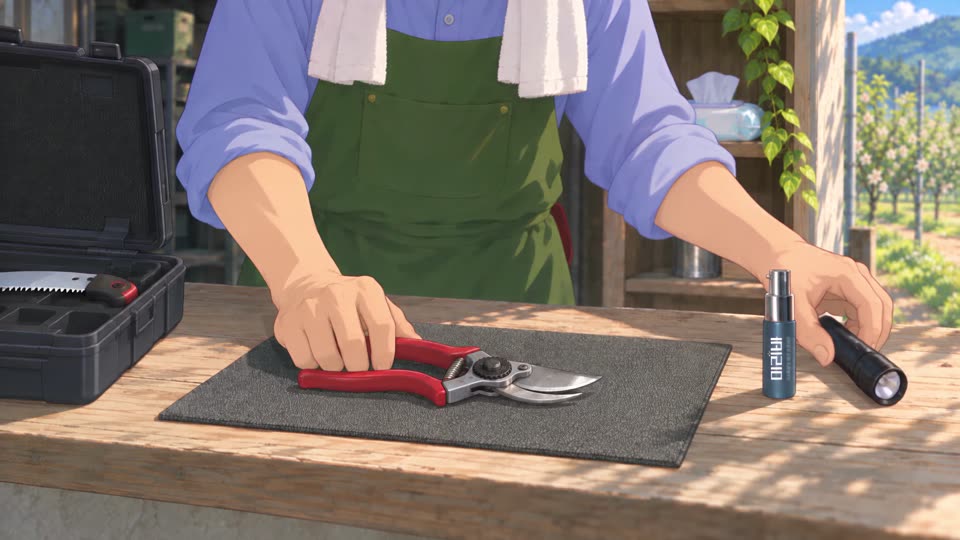
These scenes from the MIRIVA film show how it is used. Real fluorescence may differ in color and brightness.
- Spray
- Shine
- Wipe
- Log
Spray MIRIVA on the shears.
Orchard log
No entries yet.
Fire blight
A plant disease with no cure
Fire blight is a bacterial disease of about 180 species in the rose family, including apple and pear. It spreads fast and has no cure. In Korea, infected orchards are buried, and host trees can't be replanted there for two years. As the climate warms, it is reaching more regions.
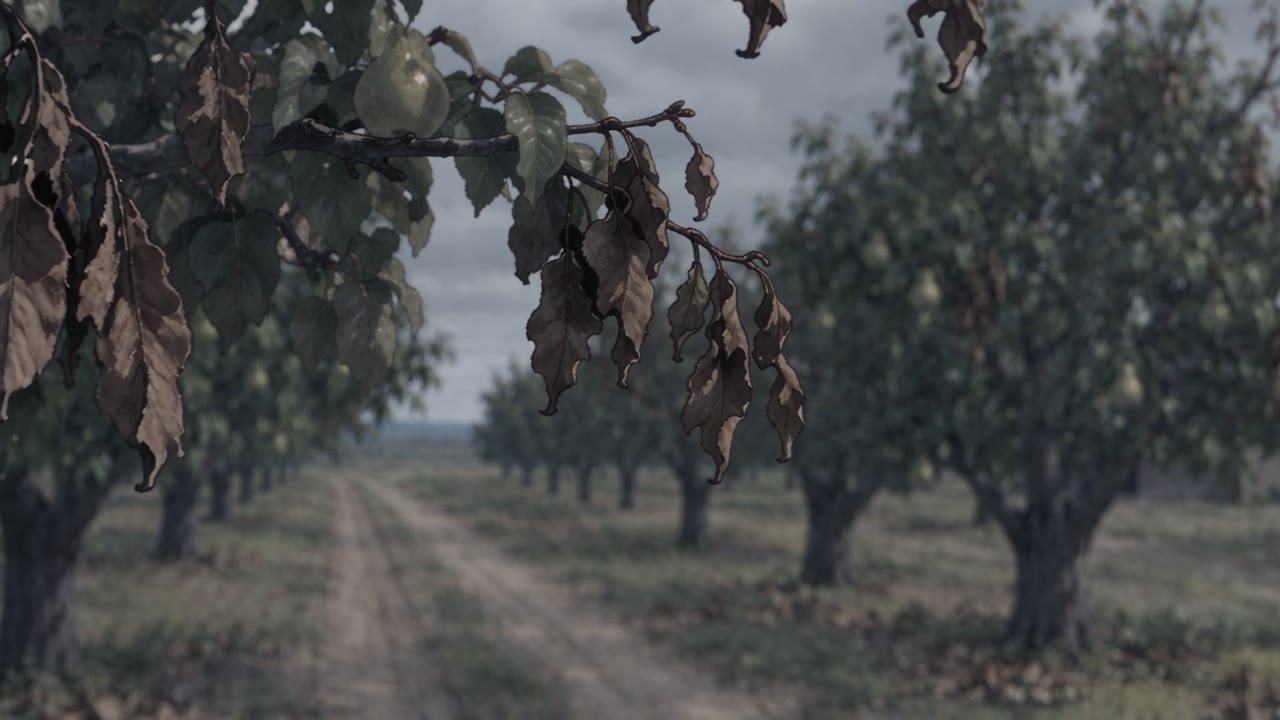
By the time you see it, it's too late
When leaves and shoots look scorched, the bacteria have already spread through the orchard.
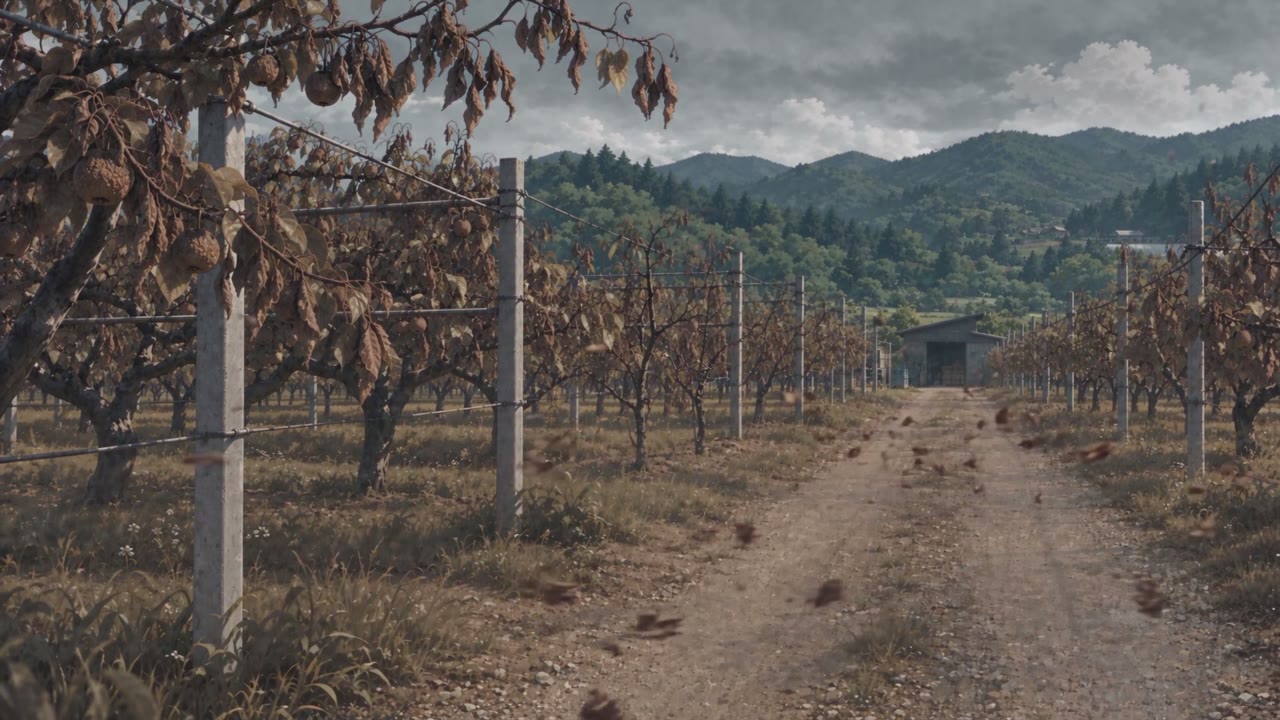
Whole orchards are buried
Infected orchards are destroyed, and apple or pear trees can't be replanted for two years. Infected trees lose up to 30% of their yield.
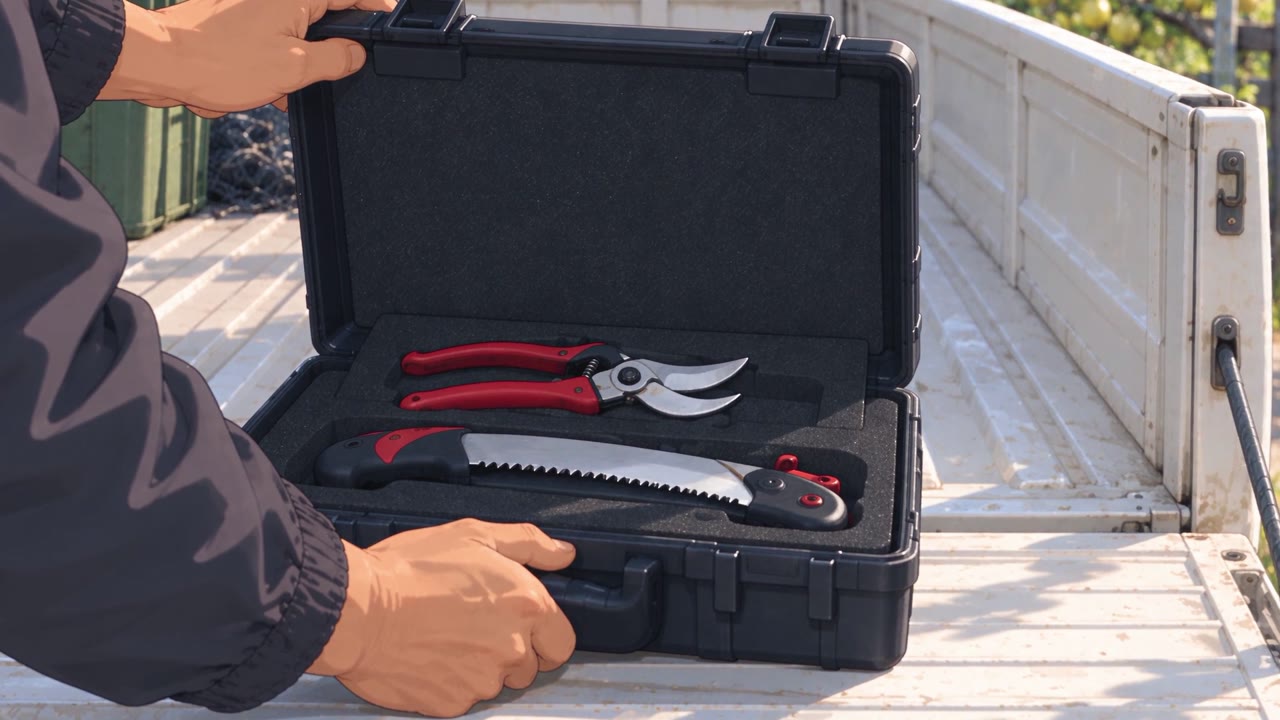
Contamination can't be seen
Bacteria on a blade are invisible to the naked eye, and today's control system has no way to check which tools are contaminated.
- cities and counties in Korea with fire blight outbreaks, 2015–2026
- Rural Development Administration, as of May 28, 2026
- in compensation paid to 2,189 farms in 34 cities and counties through 2023
- Rural Development Administration
- Korea's apple and pear production in 2024, the market fire blight puts at risk
- Rural Development Administration
Outbreak map
From 3 to 44 cities and counties
Fire blight was first found in Korea in 2015 and has reached new areas almost every year since. Step through the years to see how far it has spread.
3 cities and counties
First outbreak
First confirmed in Anseong (Gyeonggi), Cheonan (Chungnam), and Jecheon (Chungbuk).
- Anseong
- Jecheon
- Cheonan
Cities and counties affected, by province
- Gyeonggi1
- Chungbuk1
- Gangwon0
- Chungnam1
- Gyeongbuk0
- Jeonbuk0
- Sejong0
How it spreads
Fire blight travels on work tools
During blossom thinning, fruit thinning, and pruning, bacteria on shears and gloves spread within and between orchards. Much of this work is done by outside crews who move from orchard to orchard.
- of orchards infected in 2021 had outside workers do fruit thinning
- Animal and Plant Quarantine Agency
- of the same orchards had outside workers do pruning
- Animal and Plant Quarantine Agency
- regions investigated where work tools were the likely entry route
- Animal and Plant Quarantine Agency
- how long fire blight bacteria can survive on pruning shears
- Rural Development Administration
Quarantine Agency figures come from interviews at orchards infected in 2021 (144 pruning, 140 thinning).
Compared with existing methods
On site, for anyone, in 30 seconds
Until now, finding fire blight bacteria meant sending samples to a lab or using field kits with much lower sensitivity.
qPCR
- Where
- Labs and quarantine agencies
- What it takes
- DNA extraction, sample prep, and lab equipment
- Sensitivity
- High
Immunochromatography
- Where
- In the field
- What it takes
- Read according to each kit's procedure
- Sensitivity
- About 10⁶ CFU/mL
MIRIVA
- Where
- In the field
- What it takes
- Spray and check under UV, no prep
- Sensitivity
- 10² CFU/mL (internal tests)
Figures for other methods come from published product information. Test conditions differ, so direct comparison is limited.
Technology
It started with a fluorescent probe for plant disease
At the core of MIRIVA is a turn-on fluorescent probe: a small molecule designed to glow only when it binds to fire blight bacteria. It detects the bacteria on tool surfaces and in crop samples.
See how the probe lights up
Step through, and switch the bacteria on and off to compare.
Probes find the lipopolysaccharide (LPS) and lipoproteins on the bacterium's outer membrane and attach to them.
A simplified diagram of how it works.
Research and IP
- Patent
- Fluorescent probe for detecting fire blight bacteria and its use (KR 10-2684373; PCT/KR2024/001260)
- Paper
- Jung Y. et al. On-site applicable diagnostic fluorescent probe for fire blight bacteria. iScience 26(4), 2023
- Paper
- Jin J. H. et al. Protocol for diagnosing Erwinia amylovora infection using a fluorescent probe. STAR Protocols 4(3), 2023
- Technology transfer
- Licensed from Kyung Hee University Industry-Academic Cooperation Foundation (May 2025)
Field trials
Tested in Korea's main fruit-growing regions
Selected for the 2026 industry–academia cooperation program of the Foundation of Agri. Tech. Commercialization and Transfer (FACT), we are testing tool hygiene checks with four universities in orchards across 10 cities and counties.
Four-party agreement
With FACT, Gunsan Horticultural Cooperative, and the Gunsan Innopolis project group, we are bringing 30-second fire blight detection to the field (April 21, 2026).
First deliveries
Within three months of launch, MIRIVA was being supplied to public agencies, agricultural cooperatives, and grower groups.
What's next
From fire blight to more plant diseases
We are building on what we learned from fire blight to cover more diseases and markets. Our goal is a product used by 50,000 farms by 2030.
- 01
Better technology
Improve detection and ease of use, and set a standard field procedure.
- 02
More products
Launch three or more probes for other diseases by 2030. Candidates include anthracnose, wilt, Phytophthora blight, and brown leaf spot.
- 03
Global markets
Expand to fruit-growing regions in Japan, Europe, and the United States.
AI for agrochemical discovery
We use AI to find new fluorescent probe and agrochemical candidates faster.
Partners
Working with research institutes, universities, and cooperatives









FAQ
Questions people ask before buying

A solution that protects your farm from plant epidemics. See the threat early with MIRIVA, and prevent it.
MIRIVA is sold through our online store. For bulk orders from cooperatives or local governments, field trials, research, or investment, write to us.